Moremi beyond the water
Woodland, grassland and waterways belong in the same view of Moremi. Build your visit around that variety and the practical route into it.
Moremi helps correct the idea that a delta visit is entirely about boats and open water. Its terrestrial habitats are part of the wetland’s wider pattern. Trees, grassy clearings and changing water margins can sit close together, but the way you reach them matters as much as their appearance on a map.
Place Moremi within the delta
The Botswana Tourism Organisation places Moremi in the central and eastern Okavango. Its overview describes a mixture of floodplains, waterways, grasslands and forests. This is useful geographical context, but it does not mean that every camp or excursion marketed with the delta’s name is inside the reserve.
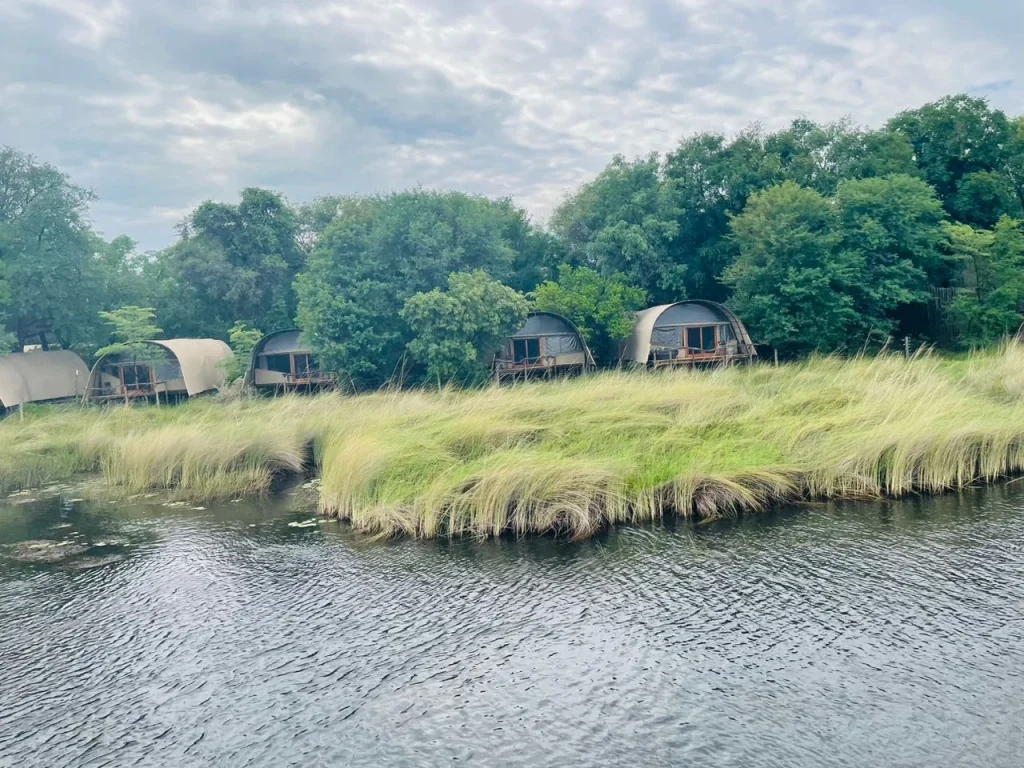
Ask for the actual location of your accommodation and the area covered by each activity. Distinguish a reserve visit from an outing in another part of the delta. A familiar place name in a tour title may describe a wider itinerary rather than every stop within it.
Consider access before adding distance
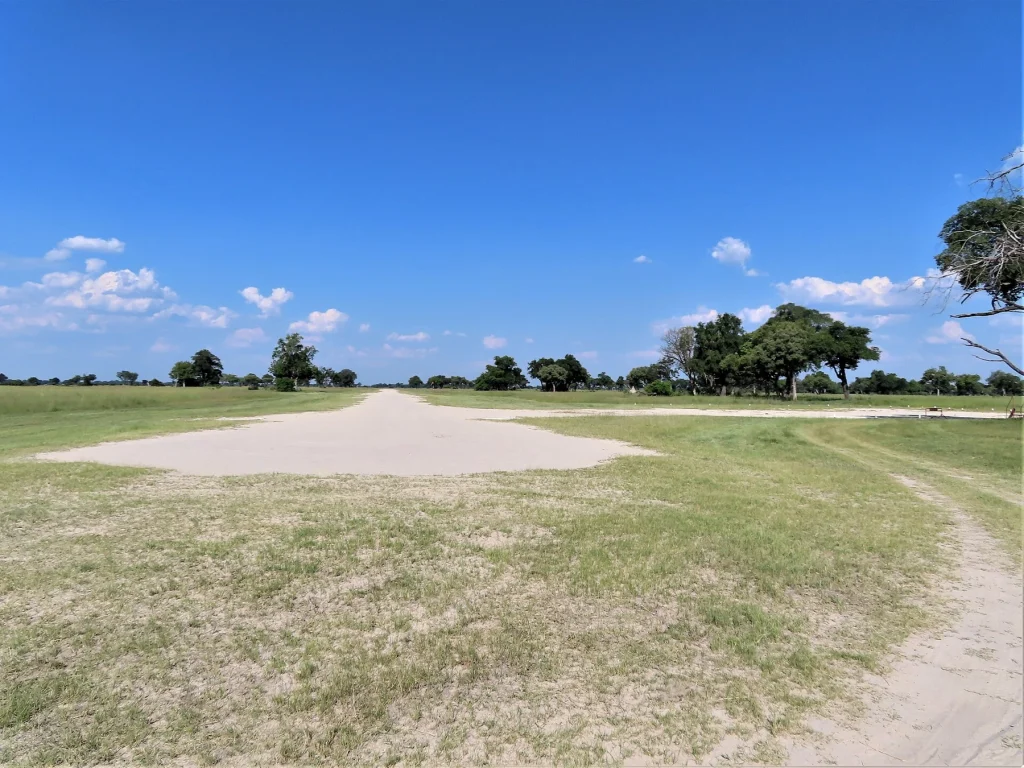
Do not turn a straight line on a map into a driving assumption. Tracks, crossings and access arrangements need current local confirmation. If you are considering independent travel, discuss the route, vehicle requirements, permissions and contingency plans with the responsible operator or authority. A general guide cannot establish present track conditions.
A shorter route with time to stop can be more useful than a sequence of distant names. Leave room for the actual pace of a guided outing and for changes that the people responsible for the trip consider necessary.
Notice the habitat as well as the sighting
- Within a woodland scene:
- Look at the spacing and form of the trees.
- Notice the contrast between open ground and cover.
- Near a water margin:
- Observe the transition from reeds or grasses to deeper water.
- Ask how that particular place changes, rather than generalizing across the delta.
This approach gives a guide something concrete to discuss and makes the outing interesting beyond a list of animals. Keep observation subordinate to the guide’s instructions. Do not ask a driver or poler to approach wildlife more closely for a photograph.
Put the image in context
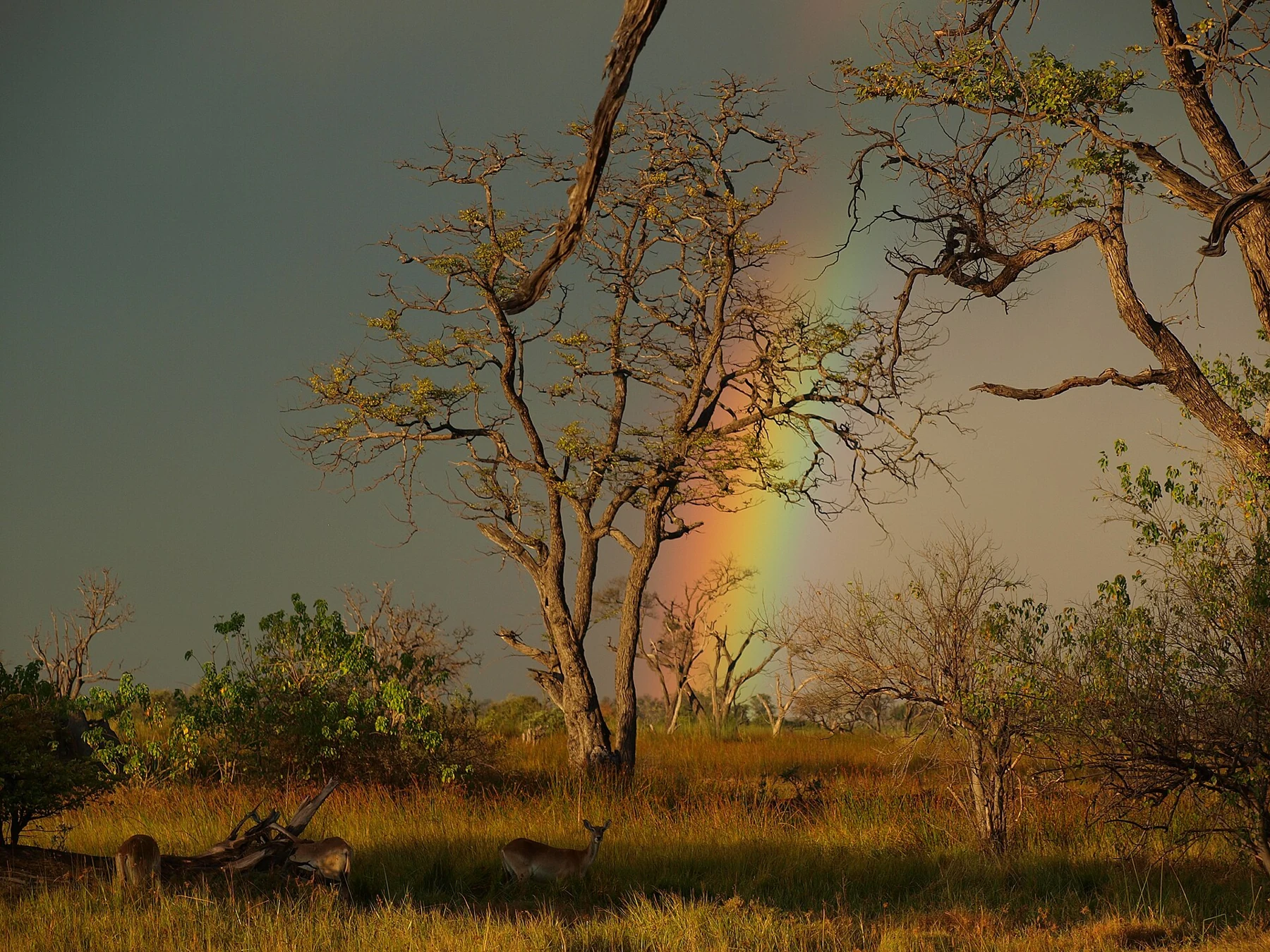
The photograph accompanying this guide was identified by its photographer as Xakanaxa in rainy weather. It records one scene, not a seasonal guarantee or a promise of the same conditions. The place and the moment are more useful than a generic label such as “perfect safari weather.”
For the wider relationship between permanent and seasonal water, see the water guide. When selecting a base for the delta, check whether the location supports the land and water interests that matter to you. A good combination begins with accurate geography and a realistic transfer plan.